The Moonphase Renaissance
As watch lovers move away from pure utility and back toward romance, the moonphase is reclaiming its place as the most poetic complication on a dial.

In an age where your phone can tell you the exact time in five different cities at once, nobody actually needs a mechanical watch to tell them what the moon is doing. But that is exactly why the moonphase is having such a huge comeback right now.
It is a complication that serves no real modern purpose other than to look beautiful and remind us that time is connected to the stars.
After years of focusing on rugged sports watches that look like they belong on a submarine, people are falling in love with the quiet and artistic side of watchmaking again.
The moonphase is one of the oldest complications in history, originally designed to help sailors and farmers track the tides and the night sky.
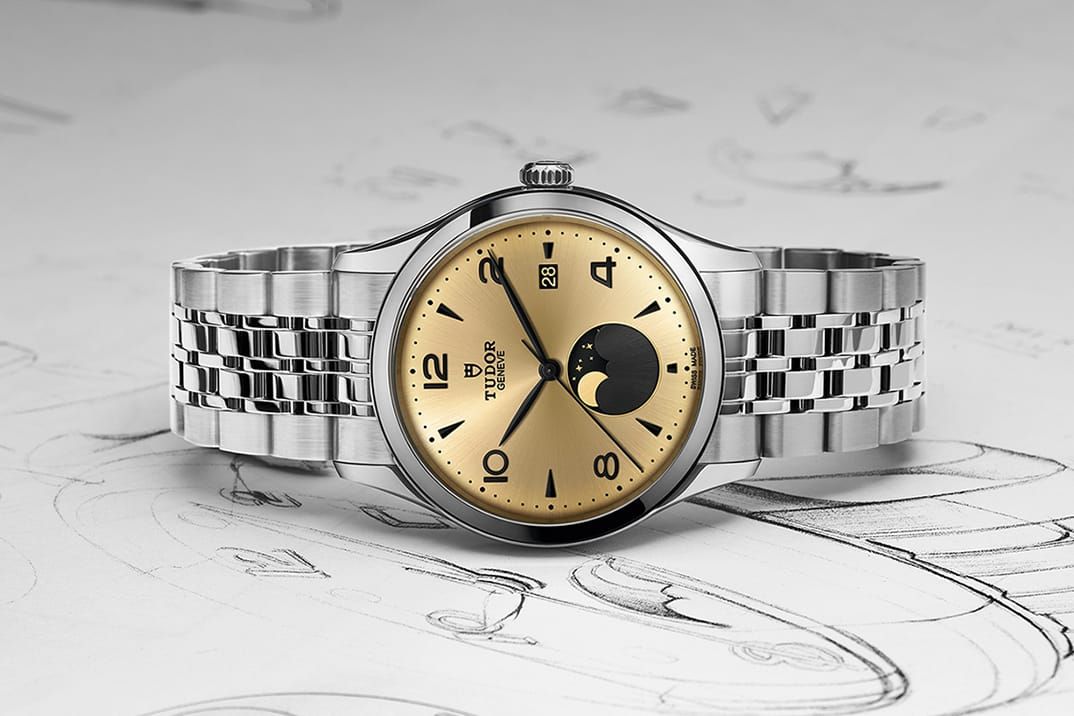
On a watch dial, it usually appears as a small curved window where a golden or silver moon slowly travels across a dark blue background. What makes it so charming is the pace.
Unlike a chronograph with a sweeping second hand or a clicking date window, the moonphase moves so slowly that you cannot even see it happening. It takes roughly twenty-nine and a half days to complete a full cycle, matching the actual lunar month.
The reason we are seeing a renaissance in this design is that watchmakers are getting much more creative with how they present it.
We are seeing brands move away from the traditional "smiling face" moon and toward hyper-realistic depictions.
Some dials now feature moons made of real meteorite or discs of aventurine glass that look like a shimmering galaxy. High-end brands like A. Lange & Söhne and Arnold & Son have even created "high precision" moonphases that are so accurate they only need to be adjusted once every one hundred and twenty-two years. It is a staggering level of engineering for something that is purely for the sake of art.
Ultimately, the return of the moonphase is about emotion. It turns a watch from a tool into a story. When you look down at your wrist and see a tiny golden moon peeking out from behind a silver cloud, it offers a moment of calm in a busy day.
It is a small piece of the universe that you can carry with you, and in a world that feels increasingly digital and fast, that connection to the natural rhythm of the sky is something many collectors are finding they can no longer live without.